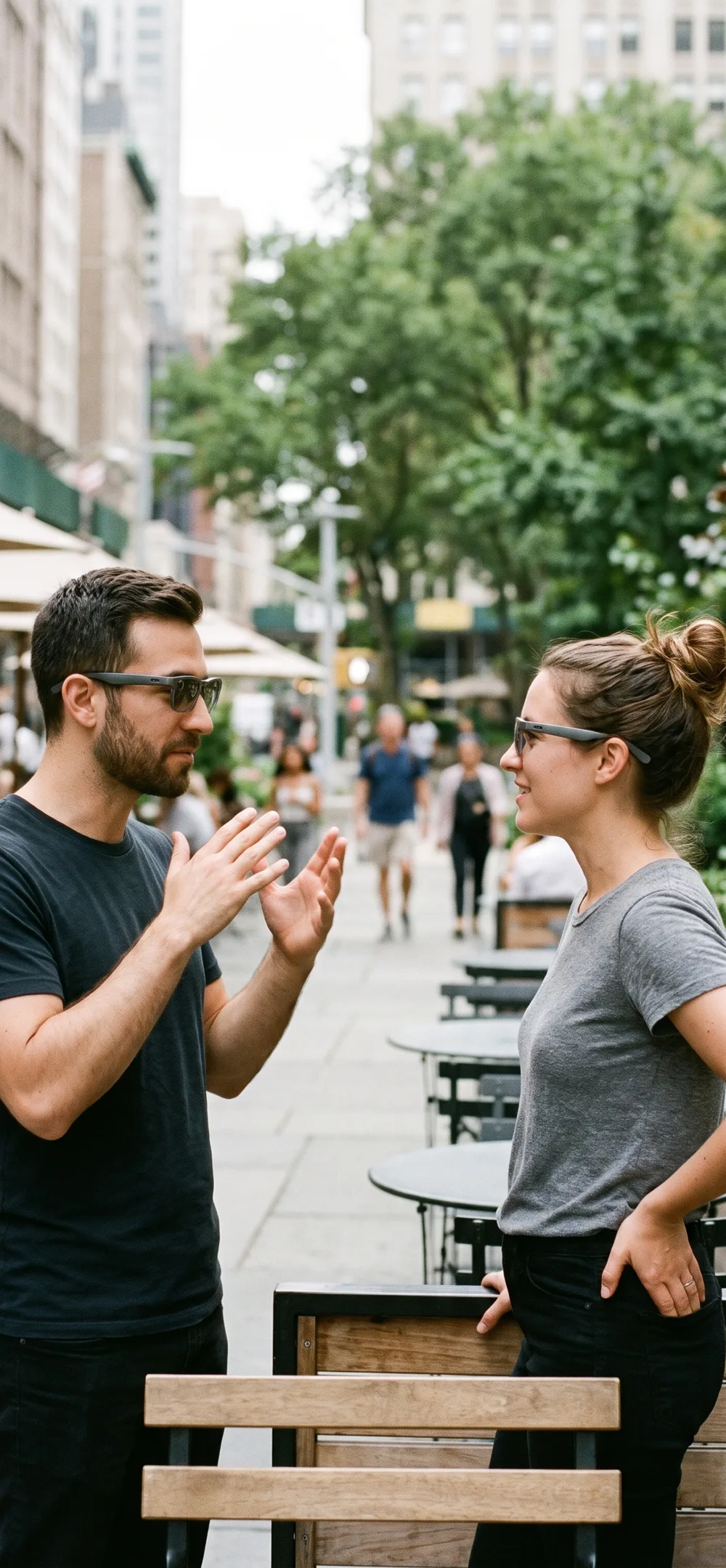
Muse 2.0
Our next-generation photorealistic avatar, built for sign language. Give it a single photo, and Muse turns it into a photorealistic digital signer.
Get early accessPhotorealistic avatars for sign language. Turn a single photo into a real-looking signer, with clear hands, natural expressions and smooth, lifelike motion.
Our next-generation photorealistic avatar, built for sign language. Give it a single photo, and Muse turns it into a photorealistic digital signer.
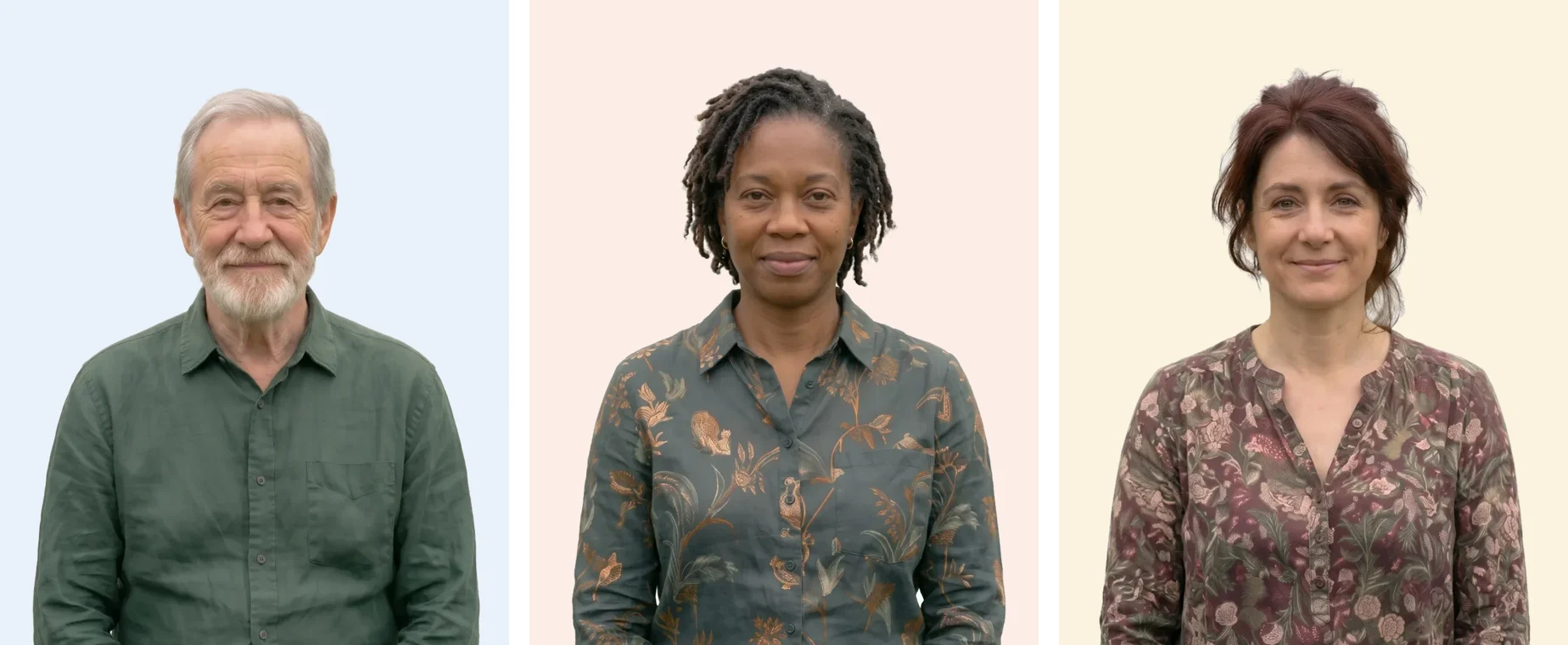
Get early accessMuse 2.0 is available in Talksign, in beta on the web, with general availability coming soon on web, mobile and desktop. Arthur (the default) and Amara are available now; Elena and Daniel are coming soon. Every avatar is created only from photos of people who gave their consent.
Organisations can create custom avatars in their own look, or of a real presenter who has given consent. Each takes a few hours to render, and costs $199 a year across both the Talksign app and the API.
Echo, Talksign’s text- and speech-to-sign translation, signs with Muse. Muse output is 720p video at 30 frames a second, on any background colour or scene.
To get started, request API access or email dev@talksign.co.
Muse works wherever sign language needs to show up. Every video comes at 720p and 30 frames a second, with a background mask so the signer fits any brand, page or scene.
Add a signing presenter to your pages and product, so Deaf visitors get the content in their own language.
Answer common questions in ASL, from a one-word reply to a full walkthrough, at any hour.
Put a signer on screens in stations, venues and receptions, with a background that matches the space.
Publish ASL versions of lessons and training with one familiar presenter from start to finish.
Give conferences, launches and festivals a signing presenter on screen, for welcomes, schedules and venue information.
Sign product launches, updates and campaigns in your brand’s look, without booking a studio.
Frame smoothness measures how stable and natural a generated video looks from one frame to the next. Muse 2.0 scores 0.966, the highest of the published human-animation systems below. Its hands are detected almost as clearly as a real signer’s (98%), and finger shapes match the original signer on 16 of 20 signs it had never seen.
Frame smoothness against research systems
| Muse 2.0Talksign | SignMimicResearch | Animate AnyoneResearch | MimicMotionResearch | Magic PoseResearch | |
|---|---|---|---|---|---|
| SSIM-TShigher is better | 0.966 | 0.963 | 0.935 | 0.904 | 0.898 |
| PSNR-TShigher is better | 33.03 | 28.90 | 27.49 | 23.75 | 25.24 |
Compared with other approaches
| MuseTalksign | 3D avatarsAnimated | AI videoGeneral | Interpreter videoFilmed | |
|---|---|---|---|---|
| Looks like a real person | Yes | No | Yes | Yes |
| Clear hands | Yes | Stiff | Often distorted | Yes |
| Any background | Yes | Yes | Varies | No |
Where Muse can grow. On identity similarity, how closely the avatar matches its reference photo, Muse 2.0 scores 0.64; published results for HeyGen (0.79), KlingAvatar 2.0 (0.77) and OmniHuman-1.5 (0.71) are higher. Those tools hold a face steady while it talks; Muse has to hold it through fast hand and body movement. Fingers can also be distorted on some fast or overlapping signs; we flag and review these.
Muse 2.0 figures come from 20 ASL signs held out from training (979 frames). Other systems’ values are from SignMimic’s published results on ASL 50K and from JoyStreamer, measured on different test sets, so they show the level each system reaches, not a head-to-head.
Every avatar is created only from photos of people who gave their consent. Muse output is machine-generated and should be labelled as such. It is not a replacement for a qualified interpreter in legal, medical or emergency settings. We’re preparing a blind study in which fluent Deaf ASL users rate Muse, other signing systems and a human signer, and we’ll publish the results.